


Find The Cat 2 - Spot It!
4.91.99K Reviews
App Specs
- Version
- 1.17.0
- Updated On
- License
- Free
- Downloads
- 1,000,000+
- Developer
- Agave Games
- Categories
- Puzzle
- Platform
- Android
Screenshots
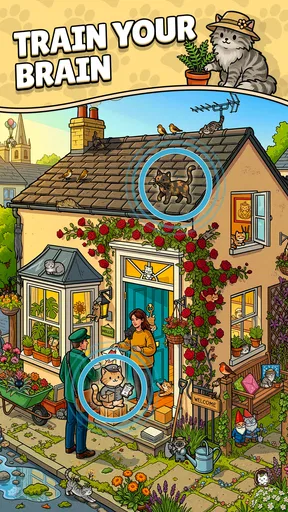
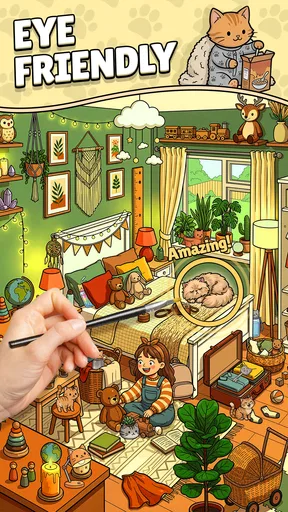

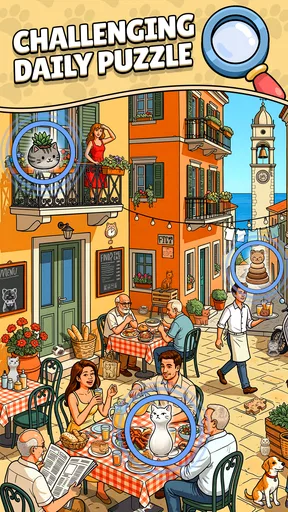
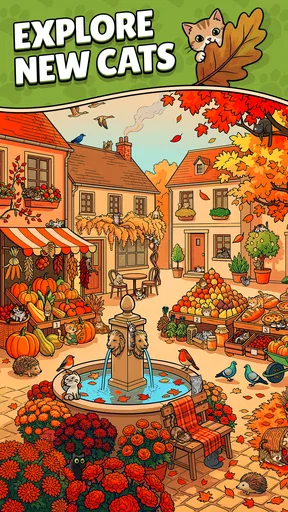

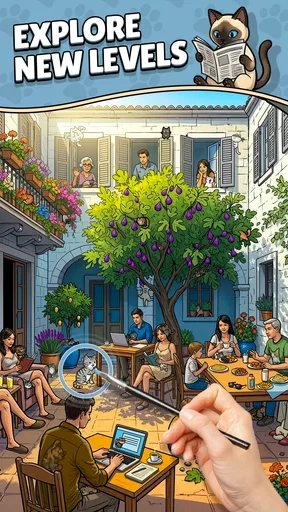
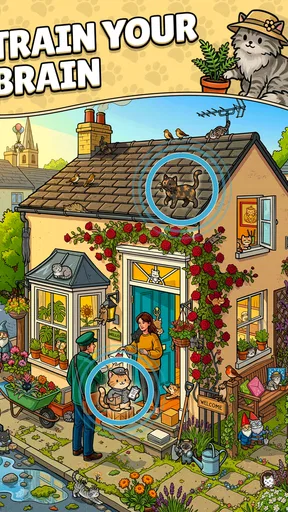
 Analysis by AppCompare
Find The Cat 2 is a relaxed hidden-object puzzle built around one simple aim: scan a scene and spot the cats tucked into it. I like that clear premise. It asks for attention rather than quick reflexes, so I can dip in for a small mental break without needing to learn a complicated ruleset. The trade-off is just as clear: if you want layered puzzles, a story, or a steady stream of new mechanics, this may feel too slight.
A small game for the gaps in your day
What makes this kind of search useful is how little preparation it asks of me. I can open a scene without recalling a previous move, following a storyline, or setting aside a long stretch of uninterrupted time. That makes it a natural fit for a short wait or a quiet break, though it is less suited to a commute where I cannot comfortably keep my eyes on the screen.
It is also a game I would share by passing the device back and forth. One person can scan the left side while another checks the background, then compare what each noticed. That turns the search into a casual conversation rather than a formal competition. I would not count on it for a structured group activity, but it can give two people a simple common task when neither wants a complicated game.
Why the simple search works
Made by Agave Games, this free puzzle game is easy to understand at a glance. Its store summary gets straight to the point, and the experience is similarly direct: look carefully, identify what belongs in the scene, and find the cats. That makes it approachable for someone who rarely plays games, while still giving attentive players a modest visual challenge.
The strongest part of this format is the change in pace it creates. Instead of racing through a level or matching pieces under pressure, I can let my eyes travel around the image and notice small details. That slower rhythm suits a short pause during the day, a quiet stretch before bed, or a low-key game to share with someone who enjoys searching illustrations together.
The challenge in a hidden-object game is not simply making targets hard to see. If everything blends together, searching becomes frustrating; if the targets stand out immediately, there is little satisfaction in finding them. The appeal here rests on that balance: the scene should invite a careful scan, with discoveries that reward looking again rather than tapping at random.
That also makes it a different kind of puzzle from the usual match-three game or word search. Match-three titles tend to ask for repeated moves and quick pattern choices, while word puzzles focus on spelling and vocabulary. This game puts more weight on visual attention. Choose it when you want to inspect a picture; pick another format when you would rather plan a chain of moves, solve a written clue, or develop a strategy over several rounds.
Worth Reading Before You Choose

Baby Panda World Brings Quick Play to Modern Phones, but Its Game Library Feels Busy

ESPN’s Live Game View Makes Following Close Games Easier

QuizzLand Review: A Good Fit for Short Trivia Breaks, Not Every Player

Basketball Stars: Multiplayer Is Fast, but Can It Recover When Matches Go Wrong?

WEBTOON Turns Phone Updates Into a Better Reading Routine

Link to Windows Runs on Shared Habits, Not Social Feeds
A better way to search than tapping everywhere
A useful habit is to divide each scene into broad areas before looking closely: scan one side, then the center, then the remaining edge. After that, revisit regions with strong visual clutter or overlapping shapes. This simple routine keeps the search deliberate and makes it easier to notice a cat that the eye initially treated as part of the background.
I would also avoid staring only at the most colorful or central objects. Hidden-object scenes often draw attention toward their obvious focal points, but a patient sweep around the margins can be more productive. If you get stuck, pause for a moment and change your viewing distance or angle on the screen. A short reset can help a shape that seemed invisible become distinct, without turning the level into a frantic hunt.
These are practical ways to approach the game, not a promise that every scene follows the same pattern. The point is to make observation feel satisfying rather than to guess where a target might be. For a casual puzzle, that small shift in method is valuable: it gives a player something to improve even when the basic objective stays familiar.
Where the format can wear thin
The same simplicity that makes the game welcoming can limit its appeal. Finding cats is a narrow central activity, so players who need a changing objective may tire of repeating the search. If you expect narrative progression, elaborate logic problems, or a deep system to master, this is not the game I would choose first. It is better understood as a focused visual pastime than as a broad puzzle adventure.
There is another trade-off with this kind of play: the enjoyment depends heavily on the scenes and on how clearly their details can be read. A player who dislikes close visual scanning may find the core task more tiring than relaxing. On a small screen, it can also be less comfortable to inspect fine details for a long stretch, so I would treat it as a short-session game rather than something to play continuously for hours.
Because the objective is so easy to grasp, the game is a good fit for sharing informally, but it is not automatically a better group game than a dedicated party puzzle. Two people can take turns searching or compare what they noticed, yet anyone looking for competition, a social mode, or collaborative mechanics should not assume that a shared screen will provide those things. The appeal is in the image hunt itself.
Who will get the most from it
I would recommend it to people who enjoy illustrations, seek-and-find books, and low-pressure puzzles. It can work well for a brief break when you want a task that occupies your attention without demanding a long session. It is also a reasonable choice for a casual player who wants to try a puzzle game without first learning a complicated interface or committing to a strategy-heavy challenge.
For a realistic everyday use, imagine waiting for a drink at a café or sitting through a quiet interval between errands. This is the sort of game I would open for a few minutes, focus on one scene, then put away when the wait ends. The search gives that spare time a little structure, but the simple objective means I do not need to remember a plot or plan from a previous session.
It carries an Everyone age rating, which makes its basic premise easy to consider for a broad audience. I would still choose it based on the person’s patience and visual comfort: a child or adult who likes careful observation may enjoy it, while someone who wants constant action or more varied problem-solving may lose interest. For a family, it is best viewed as a gentle shared activity, not a substitute for a game designed around teamwork.
The game has a 4.9 average from around 89,000 ratings, and it has passed one million installs. Those figures suggest that its straightforward appeal has found a substantial audience, but they do not change the key question for a new player: do you enjoy searching pictures closely? If yes, the central loop has a clear reason to appeal; if not, popularity is unlikely to make the repeated spotting feel rewarding.
Cost, version, and what to expect
You can start playing for free, while optional in-app purchases range from $2.99 to $8.99 per item. I would approach those purchases as optional extras rather than a reason to install: the game’s basic attraction is the act of looking carefully, so consider whether you are enjoying that loop before spending. The presence of purchases is worth knowing if you are choosing a game for a younger player or keeping an eye on spending.
It was released on January 30, 2026, and version 1.17.0 is the current version. The minimum operating system is 10, so it is worth checking that your device meets that requirement before trying to install it. These are practical details, especially if you are considering an older phone or tablet, but they do not alter the game’s core appeal as a lightweight search puzzle.
With about 2,000 written reviews, there is a healthy amount of player feedback to browse if you want more perspectives before deciding. I would focus on comments that discuss the search experience and session-to-session enjoyment, rather than treating a high average as proof that the game will suit every puzzle fan. Preferences matter more here than raw popularity: the game is at its best when its one central task is exactly what you want.
My verdict for casual puzzle players
My recommendation is specific: try Find The Cat 2 if you enjoy visual scavenger hunts and want a calm game that can fit into small gaps in the day. Its direct objective is a strength, not a flaw, for players who would rather observe than compete. The most rewarding way to play is patiently: scan in sections, revisit overlooked areas, and stop when the search no longer feels fun.
I would skip it if your idea of a good puzzle depends on evolving rules, story, tactical depth, or a strong sense of progression. In that case, a logic game or a more varied hidden-object alternative will likely hold your attention longer. For everyone else, this is a clear, approachable way to give your eyes something to do. The best reason to install it is also the simplest: you genuinely enjoy looking for the details other people miss.
How to decide before committing
If you are unsure whether the search loop is for you, I would treat the first play as a test of visual comfort, not as a challenge to finish as quickly as possible. Try scanning at a relaxed pace and notice whether the process itself feels pleasant. If you catch yourself enjoying the careful sweep even when a cat takes time to find, that is a better sign of fit than simply liking the theme.
Device size matters in a practical way. On a larger screen, small shapes are easier to inspect without leaning in; on a compact phone, I would keep sessions brief and give my eyes a break rather than zooming into every detail for too long. The game’s basic premise travels well to short mobile sessions, but the pleasure of searching depends on being able to see the artwork comfortably.
What it offers that other puzzle styles do not
Compared with a conventional hidden-object game built around a long list of items, this cat-focused search has a narrower goal and is easier to pick up casually. Compared with a logic puzzler, it asks less of your working memory: you are reading a visual scene, not carrying a chain of deductions across several steps. That simplicity is a strength when you want an easy reset, but a weakness if variety and escalation are what keep you engaged.
One useful trade-off is that there is no need to turn every search into a race. I would resist tapping quickly just to feel productive; a deliberate sweep is less likely to become random and makes the act of noticing the point of play. If you are sharing the screen, agreeing to search different regions can also prevent both players from repeatedly checking the same obvious center.
For someone choosing a game for a child, the Everyone rating and uncomplicated objective make it an accessible option to consider, but I would still supervise purchases if spending needs to stay controlled. The optional items are priced from $2.99 to $8.99, so a free start does not mean every possible in-game option has no cost. I would set expectations before handing over a device, especially if the player can make purchases independently.
Find The Cat 2 works best when you want a quiet visual task, not a full evening’s worth of evolving puzzles. Its focused search can make a spare moment feel more engaging, and a patient scanning method gives the simple objective a little more texture. I would choose it for a relaxed solo break or an informal shared hunt, and choose another puzzle game when I want deeper rules, more varied goals, or sustained strategic decisions.
Pros
- Simple rules make it easy to start playing right away.
- Hidden cats provide a satisfying visual-search challenge.
- Short levels are convenient for quick play sessions.
- Bright artwork makes objects easy to distinguish.
- Suitable for players who enjoy relaxed puzzle games.
Cons
- Small details may be difficult to spot on smaller screens.
- Some scenes can feel repetitive after extended play.
- Visual searches may be less enjoyable for players who prefer action.
- Progress can depend on patience when a cat is hard to find.
- The game may offer limited appeal to players seeking deep strategy.
FAQs for Find The Cat 2 - Spot It!
What is Find The Cat 2 - Spot It!?
Find The Cat 2 - Spot It! is a hidden-object puzzle game built around searching illustrated scenes for cleverly concealed cats. Each level asks you to inspect the picture carefully and tap the cat when you spot it. The appeal comes from taking your time, noticing small details, and enjoying the artwork rather than reacting quickly or mastering complicated controls.
Is Find The Cat 2 - Spot It! suitable for children?
The basic hide-and-seek format is easy to understand and can be enjoyed by players of different ages. Its gentle puzzle-solving style may make it a good choice for a short, relaxed play session, including with younger players. Before downloading it for a child, check the current store listing and in-app settings for age guidance, advertisements, purchases, and any other content that may affect your decision.
Can I play Find The Cat 2 - Spot It! offline?
Whether the game works without an internet connection can depend on its current version and how it delivers levels or other content. Some puzzle games let you revisit downloaded stages offline, while features such as ads, rewards, or updates may require a connection. Check the app’s store description and test it on your device before relying on it for travel or other offline play.
Is Find The Cat 2 - Spot It! free to download, and does it include ads or in-app purchases?
The price, advertising, and purchase options can vary by platform, region, and app version, so check the Google Play or Apple App Store listing before installing. A game may be free to download but still display ads or offer optional purchases. Review the listing and your device’s purchase controls if you want to avoid unexpected charges or limit spending.
What should I check before downloading Find The Cat 2 - Spot It!?
Make sure your phone or tablet meets the app’s current operating-system and device requirements, and confirm that you are downloading the intended game from an official store. Also review the latest user ratings, requested permissions, privacy information, and any notes about ads or purchases. These details can change with updates, so the current listing is the best source before installation.


